LET'S VISIT BANDA ACEH

Banda Aceh is the provincial capital of Aceh Province, formerly known as Kutaraja until 1962. On April 22nd, 2016, Banda Aceh celebrated its 814th anniversary. Today,...

DAYA TARIK WISATA JAWA TENGAH

Candi Borobudur merupakan candi Budha terbesar di dunia. Candi ini adalah salah satu masterpiece di antara tujuh keajaiban dunia. Candi Borobudur terletak di...

NGABEN: UPACARA ADAT PEMAKAMAN DI BALI

Upacara pemakaman jenazah atau kremasi umat Hindu di Bali atau dikenal dengan nama Ngaben merupakan suatu ritual yang dilaksanakan...

SEJARAH RUMPUN BAHASA AUSTRONESIA

Menurut Arkeolog Harry Truman Simanjuntak, Austronesia merupakan salah satu rumpun bahasa yang terbesar di dunia. Rumpun bahasa ini meliputi...

ALBERT EINSTEIN

Albert Einstein was born in Ulm, Germany, in 1879. As a young boy, Einstein lived in...

Kamis, 31 Desember 2015

SEJARAH RUMPUN BAHASA AUSTRONESIA

     
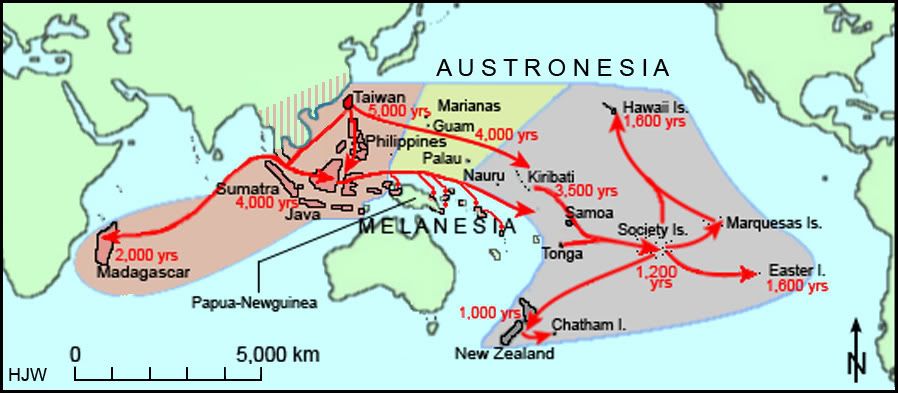
     Menurut Arkeolog Harry Truman Simanjuntak, Austronesia merupakan salah satu rumpun bahasa yang terbesar di dunia. Rumpun bahasa ini meliputi 1.252 bahasa dan dituturkan oleh lebih dari 300 juta jiwa penutur asli. Masyarakat penuturnya tersebar di wilayah sepanjang 15 ribu km (lebih dari separuh bola bumi), dari Madagaskar di barat hingga Pulau Paskah di ujung timur, dari Taiwan-Mikronesia di utara hingga Selandia Baru di selatan. Dari sisi jumlah bahasanya, rumpun Austronesia menduduki urutan ke-2 sebagai rumpun bahasa terbesar di dunia. Sedangkan dari jumlah penutur aslinya, rumpun ini menduduki urutan ke-5.

     Mengenai asal usul penutur rumpun bahasa Austronesia ini, terdapat beberapa hipotesis yang menyatakan bahwa leluhur penutur bahasa Austronesia berasal dari Pulau Formosa, Taiwan. Salah satu pakar linguistik yang lantang menyuarakan hipotesis ini adalah Robert Blust. Menurutnya, sembilan dari sepuluh cabang utama rumpun bahasa Austronesia terbentuk dari bahasa-bahasa Formosa, sedangkan satu cabang utama lainnya terdiri dari hampir 1.200 bahasa Melayu-Polinesia yang tersebar di luar Formosa. Robert Blust sudah mencoba merekonstruksi silsilah dan pengelompokan bahasa-bahasa dari rumpun Austronesia sejak 1970-an. Meski pakar bahasa sepakat dengan beberapa rincian analisis Robert Blust, tetap disepakati kesimpulan umum bahwa bahasa-bahasa Austronesia berasal dari Taiwan. Teori ini dikenal sebagai teori Model Out of Taiwan.

     Menurut teori Model Out of Taiwan, leluhur bangsa Austronesia berasal dari Cina Selatan yang bermigrasi ke Taiwan pada masa 5000-4000 SM. Beberapa abad setelahnya, muncul akar rumpun bahasa Austronesia. Sekitar 4500-3000 SM, ada satu kelompok leluhur yang memisahkan diri dan bermigrasi ke Filipina bagian utara. Mereka kemudian melahirkan cabang bahasa yakni Proto Melayu Polinesia (PMP). Selanjutnya, sebagian masyarakat penutur PMP mulai bermigrasi dari Filipina ke Kalimantan, Sulawesi, dan Maluku Utara, melalui Filipina Selatan. Melalui proses migrasi ini, lahirlah cabang bahasa baru, yaitu bahasa Proto Melayu Polinesia Tengah-Timur (PCEMP) yang berpusat di Maluku Utara dan bahasa Proto Melayu Polinesia Barat (PWMP) di kepulauan Indonesia bagian barat.

      Leluhur yang ada di Maluku Utara kemudian berpindah ke selatan dan timur pada 3000-2000 SM. Perpindahan ke selatan hingga ke Nusa Tenggara menghasilkan cabang bahasa Proto Melayu Polinesia Tengah (PCMP). Sementara perpindahan masyarakat penutur ke timur hingga pantai utara Papua Barat menghasilkan bahasa Proto Melayu Polinesia Timur (PEMP). Perpindahan penutur PEMP di wilayah pantai barat Papua Barat ke Halmahera Selatan, Kepulauan Raja Ampat, dan pantai barat Papua Barat menghasilkan bahasa Halmahera Selatan Papua Nugini Barat (SHWNG). Kelompok dari masyarakat penutur PEMP lainnya lalu berpindah ke Oseania, dan sampai ke Kepulauan Bismarck di Melanesia sekitar 1500 SM. Dari proses migrasi ini muncul bahasa Proto Oseania.

     Sementara itu, penutur PWMP di Kepulauan Indonesia bagian barat yang menghuni Kalimantan dan Sulawesi kemudian bergerak menuju selatan pada 3000-2000 SM. Kelompok ini kemudian berdiam di Jawa dan Sumatra. Sebagian di antaranya lalu berpindah lagi ke utara, termasuk Vietnam dan Semenanjung Malaka. Memasuki awal periode Masehi, persebaran leluhur penutur bahasa PWMP bergerak ke Kalimantan hingga Madagaskar.

     Harry Truman Simanjuntak menyimpulkan bahwa hampir seluruh kawasan Nusantara, hingga ke negeri-negeri tetangga dan masyarakat kepulauan di Pasifik dan Madagaskar menggunakan bahasa yang cikal bakalnya adalah bahasa Austronesia. Kecuali masyarakat pedalaman Papua dan pedalaman Pulau Timor, bahasanya lebih mirip dengan bahasa pedalaman Australia. Bahasa nasional Indonesia pun berakar dari bahasa Austronesia. Namun memang bahasa Indonesia saat ini sudah jauh lebih kompleks karena penuturnya sudah beradaptasi dengan rumpun bahasa dunia lainnya seperti India, Arab, Portugis, Belanda dan Inggris.

Source: Turangan, Lyli, Willyanto, dan Reza Fadhilla. 2014. Seni Budaya dan Warisan Indonesia Jilid 8 Bahasa dan Sastra. Jakarta: PT Aku Bisa.

IMAM ABU MANSUR AL-MATURIDI

Nama lengkapnya adalah Abu Mansur Muhammad bin Muhammad bin Mahmud Al-Maturidi. Ia dilahirkan di Maturid, dekat Samarkand (Asia Tengah), sekitar tahun 852 M / 238 H. Para ulama yang menjadi gurunya kebanyakan dari golongan Hanafiah yang disebut-sebut sebagai golongan rasional (cenderung mendasarkan pada rasio). Mereka antara lain: Muhammad bin Muqatil Ar-Razi, Abu Bakar Ahmad bin Ishaq Al-Jurjani, Abu Masr Al-Lyadi, dan Nusair bin Yahya.

Sedangkan para ulama yang pernah berguru kepadanya, antara lain: Abu Al-Qasim Ishak bin Muhammad yang lebih dikenal dengan Al-Hakim As-Samarqandi (wafat 951 M), Abu Al-Hasan Ali bin Said Al-Rastaghtani, Abu Muhammad Abdul Karim bin Musa Al-Bazdawi (wafat 999 M), dan Abu Al-Lais Al-Bukhari.

Karya tulis yang disebut-sebut sebagai karangan Al-Maturidi ada 11 buah, yaitu:
  1. Bayanul Wahm Almutazilat
  2. Raddul Usul Alkhamsah li Abi Muhammad Albahili
  3. Radd Awail Aladilat Allati
  4. Radd Tahdzib Aljadal lil Ka'bi
  5. Radd Walid Alfussaq lil Ka'bi
  6. Radd 'Ala Usulil Qaramithah
  7. Radd Kitabaat Imamat li Ba'di Arrawafid
  8. Ma'khaz Asysyara'I
  9. Kitab Aljadal
  10. Tawilat Ahlussunnah
  11. Kitab Attauhid

Dari kalangan ulama segenerasi, tampaknya hanya Al-Maturidi saja tokoh yang lebih mencurahkan perhatian pada lapangan teologi (ilmu tauhid/ketuhanan), sehingga menjelma menjadi suatu aliran. Selanjutnya aliran tersebut dikenal dengan Al-Maturidiyah. Bila dicermati dari karya-karya tulis di atas, tampak jelas bahwa Al-Maturidi secara tegas menangkis dan menyerang aliran Muktazilah dan golongan Syiah. Pada saat yang bersamaan, Imam Al-Asyari menyerang aliran Muktazilah di Irak, sedang Al-Maturidi melakukan hal yang sama di Samarkand.

Beberapa ajaran Al-Maturidi, yaitu:
  1. Tuhan itu mempunyai sifat-sifat (yang berbeda dari zat-Nya).
  2. Kalam (firman) Allah itu qadim dan tidak diciptakan (bukan makhluk).
  3. Manusia dapat melihat Tuhan kelak di akhirat.
  4. Orang-orang yang berdosa besar masih tetap berstatus mukmin, dan terserah Tuhan tentang nasibnya kelak di akhirat, apakah diampuni dan masuk surga atau harus melalui neraka terlebih dahulu.

Rabu, 30 Desember 2015

COMMISSION OF CORRUPTION ERADICATION (KPK)


As stated by the Law No. 30/2002, KPK is a state institution, which in implementing its duties and authorities is independent and free from any other institution.

Corruption Eradication Commission (KPK) was formed in order to improve the capability and affectivity of corruption eradication efforts. Corruption eradication is a series of efforts carried out to prevent and eradicate corruption through coordination, supervision, monitoring, inquiry, investigation, prosecution, and court trial, which involve the participation of society as stated by the existing regulations.

KPK's duties include:
  1. Coordination with other institutions authorized to eradicate corruption.
  2. Supervising other institutions authorized to eradicate corruption.
  3. Making inquiry, investigation and prosecution to corruptionn practices.
  4. Preventing corruption.
  5. Monitoring the running of state government.


In carrying out its duties and authorities, KPK took same measures to accelerate the prosecution of corruption. The strategy for these measures has been translated into several actions as follows.
  1. Development of system and procedure of trial for corruption cases, which would be directly handled by the KPK.
  2. Making inquiry, investigation, and prosecution of corruption cases by the KPK.
  3. Development of mechanism, system and procedures of supervision by the KPK on the handling of corruption cases by the police and attorney.
  4. Identification of legal weaknesses and conflicts among the existing laws on corruption eradication.
  5. Map of activities which is indicated as leading to corruption practices.


In order to eradicae corruption, prevention strategy in needed. The strategy to prevent corruption includes:
  1. Improving the effectivity of wealth reporting system for government officials.
  2. Development of a gratification reporting system and its socialization.
  3. Development of public complains mechanism and its socialization.
  4. Research and recommendation on the improvement of state administration system and public services indicated as being contaminated by corruption.
  5. Research and development of techniques and methods that support corruption eradication efforts.
Source: Hasim. 2010. Civic Education 1 For Senior High School Year X. Jakarta: Yudhistira.

TEORI-TEORI PENYEBARAN ISLAM DI INDONESIA

1. Snouck Hurgronje dan Moquette


Snouck Hurgronje dan Moquette merupakan tokoh sejarah yang berasal dari Belanda. Menurut mereka, islam masuk ke Indonesia melalui Gujarat, India. Teori yang mereka kemukakan didasarkan pada kenyataan batu nisan yang terdapat di berbagai tempat di Indonesia, termasuk di makam Maulana Malik Ibrahim di Gresik, mempunyai bentuk yang sama dengan batu nisan di Cambay, Gujarat, India.


2. Soetjipto Wirjosoeparto
Soetjipto Wirjosoeparto berpendapat bahwa islam masuk ke Indonesia melalui Gujarat, India. Hal tersebut dibuktikan dengan salah satu makam raja islam di Samudera Pasai yang nisannya menggunakan batu yang berasal dari Gujarat, India.

3. Hoesein Djajadiningrat
Hoesein Djajadiningrat berpendapat bahwa islam masuk ke Indonesia melalui Iran (Persia). Teori tersebut didasarkan pada bukti dengan ejaan dalam tulisan Arab. Di mana baris di atas, di bawah, dan di depan huruf disebut dengan jabar (zabar) dan pes (pjes). Penggunaan istilah tersebut sama dengan penggunaan istilah yang berasal dari bahasa Iran, sedangkan menurut bahasa Arab, istilah tersebut disebut dengan fathah, kasrah, dan dhammah. Selain itu, terdapat pula huruf sin yang tidak bergigi, sedangkan dalam bahasa Arab huruf sin bergigi. Gelar syah yang biasa dipakai di Persia juga pernah dipergunakan oleh Raja Malaka dari Aceh.

4. Haji Abdul Malik Karim Amrullah (Hamka)
Hamka berpendapat bahwa islam masuk ke Indonesia melalui Mesir dan Makkah. Teori ini didasarkan pada sebagian besar rakyat Indonesia yang memeluk agama islam bermadzhab Syafii, seperti yang banyak dianut oleh masyarakat Mesir. Selain itu, gelar yang digunakan Raja Samudera Pasai adalah gelar raja-raja Mesir yaitu menggunakan Malik.

5. Alwi Shihab
Alwi Shihab berpendapat bahwa islam pertama kali masuk ke Indonesia pada abad pertama Hijriah atau sekitar abad ketujuh Masehi dibawa oleh pedagang Arab yang masuk ke Cina melalui jalur Barat. Teori tersebut didasarkan pada cerita Cina pada masa dinasti 'Tang yang menyatakan adanya perkampungan Arab di Cina. Dalam perkampungan tersebut penduduknya diberikan kebebasan untuk menjalankan ibadah berdasarkan keyakinannya. Cina yang dimaksudkan dalam berita Cina adalah gugusan pulau di Timur jauh, termasuk kepulauan Indonesia. Jadi, jalur awal penyebaran islam di Indonesia menurut Alwi Shihab bukan berasal dari jalur Arab, India dan Persia, melainkan dari Arab langsung.

Powtoon: An Interactive Application to Support Teachers in Creating Language Learning Media


1.      Introduction
The introduction and application of ICT in language learning has changed the landscape of education in general and language learning in particular (Hartoyo, 2012). It means that in this era, the development of technology is the important factor which influences every particular thing in language teaching and learning processes, including materials and media.
Students of twenty first century are different with the twentieth century’s students. They follow the technology development every time. They always use ICT, anytime, anywhere. It can be said that students are smarter than teachers in using the technology. However, teachers as the facilitator in the teaching and learning processes are demanded to be innovative. Teachers are among the first parties responsible for a maintaining a better understanding and competence in using ICT in their teaching activities (Hartoyo, 2012).
To be innovative teachers, they should be able to use various media in delivering their teaching materials. They have to be able to operate various software and application of ICT. Those are to make sure that teachers are not left behind their students.
To solve this problem, some schools ask their teachers to be able to operate the common-used media in delivering teaching material, Microsoft PowerPoint, that is. Schools hold teachers training in using presentation media. As a result, most of teachers are familiar with this application; however, they just able to use it commonly. Only a few of them are able to innovate their teaching materials.
In order to make teachers more innovative in creating language learning media, there is a newest application called Powtoon. It is operated online. Teachers can create interesting media of language learning to make their students more exciting to the teaching and learning process.
2.      Objectives
In this essay the writer has two objectives to be achieved as follows:
2.1.   To find whether or not Powtoon can support teacher in creating language learning media.
2.2.   To find whether or not Powtoon can make students more interesting with the language teaching and learning process.
3.      Review of Related Literature
Media are the way of communicating information (Hornby, 2006). Media are used to express something in the purpose of communicating. In this era, media are not only used in order to inform people such in the newspaper, magazine, television, and radio but also used to provide ideas in the vary sectors, such as business and school. In school, media are used in the teaching and learning process. Here, the existences of media support teachers in delivering the teaching materials.
Based on the development of technology, there are three kinds of learning media that commonly used in the teaching and learning process.
First, printed media are media that are produced on paper or other material with a machine. For example: books, encyclopedia, teaching materials, students’ worksheet, etc.
Second, audio-visual media are media that provide materials soundly and visually. For example: tape-recorder, projector, etc.
Third, computer media are media that used micro-processor in creating the materials. For example: the computer application.
Actually, the use of media in the teaching and learning process are very important especially in facing the improvement of technology. As said by Reeves (1998), that there are two major approaches in using media and technology in schools. First, students can learn ‘from’ media and technology, and second, they can learn ‘with’ media and technology. Learning ‘from’ media and technology is often referred to in terms such as instructional television, computer-based instruction, or integrated learning systems. Learning ‘with’ technology is referred to in terms such as cognitive tools and constructivist learning environments.
In this case, the writer focuses on the first approach. Students can learn ‘from’ media and technology. It means that teacher should know more about media that can improve students’ interest in the teaching and learning process. Teacher must not only have a sufficient knowledge of ICT tools but also which to utilise them (Hartoyo, 2012).
In the language teaching and learning process, the use of media is much needed. Four skills including listening, speaking, reading, and writing need media in providing them. Moreover, teachers in Indonesia commonly take advantages of presentation application such Microsoft PowerPoint in delivering the materials. To say the least, nowadays, there are some interactive presentation applications that can be used. Moreover, the newest are supporting by various design and animation so that students will more interest in the materials that is given and the teaching and learning process in the class.
Powtoon was founded in 2012 in London by Russian-born entrepreneur Ilya Spitalnik as a way for startups to create compelling animations in the browser, without spending tens of thousands of dollars. This is vital, as many startups operate on wafer thin budgets, and often lack the funds to even pay for a marketing team, let alone for flashy adverts (Hughes, 2014).
Powtoon is a nice service for creating explanatory videos through a drag and drop process. The videos that users create feature digital paper cut-outs on a colorful background. This online tool let users create videos in the style made popular by Common Craft. It provides drawings of people and objects that users can arrange on blank canvas. After adding their narration to arrangement users can publish their videos (Powtoon, 2013).
Powtoon is different with Microsoft PowerPoint. Microsoft PowerPoint just allows people to create slideshows by dragging and dropping onto a blank canvas, and building from that. It has become the de-facto tool for creating presentations, despite the fact that most presentations created with PowerPoint are painfully dull (Hughes, 2014). On the other hand, Powtoon allows users to create beautiful presentations from the comfort of their web browser, whilst restaining the same Powtoon feel and aesthetic that we all know. Powtoon is captivating, it is its benefit. It can grab the attention of the audience and make a memorable presentation.
Here are the steps to create a video in Powtoon.
·      Visit the website www.powtoon.com and login to your account. If you do not have an account, you can create a free account.
·      Click Dashboard at the top of the page. It will appear once you login to the website. This link will take you to the Powtoon that you have created or give you the option to create a new one. Your Powtoon can always be found on the dashboard.
·      When you click create you will be taken to a new page to select a template for your presentation. You can use a premade template or create your own presentation from a background template.
·      When putting together your movie or slideshow, you have to use the directions in the layer to help your navigate.
·      When adding text, music, or graphics to your Powtoon, you have the option to control when the text or image appears on the slide. To control this, use the slider at the bottom.
·      Once your Powtoon is finished, you have the option to share it, or export it (only to YouTube with a free account). Your Powtoon will always remain in your dashboard whether you do any of these things or not.
4.      Analysis
Language learning media that are used in teaching and learning process influence the success of it. In order to fulfill this success, teachers are intended to be able to follow the development of technology. In delivering materials, teachers can use Powtoon more than Microsoft PowerPoint. Related to this case, teachers may have some questions, is it an effective media that can be used for delivering the materials? Is it possible to make students more excited in the teaching and learning process?
Powtoon is not as simple as its name. In creating materials by using Powtoon, teachers have to have a good internet connection. If their connection is bad, of course, some problem will happen. The application will overload and when the video are exported into YouTube, of course, it takes time. Moreover, if teachers want to use the video which have been created as the learning media for their students, teachers have to download it first from YouTube. However, Powtoon is more attractive than Microsoft PowerPoint. It has good animation; teachers can design the video more interesting than in the Microsoft PowerPoint.
In order to lead students interest in the teaching and learning process, media is not the only one that can be used. The role of teachers in the teaching and learning process is much needed. Teachers should engage students while they do learning activities in the classroom. Teachers should teach communicatively and interactively. To say the least, media is just one of the facilitator in the teaching and learning process beside teachers. In short, in order to make students more interest in the teaching and learning process, media can be used to support teachers.
5.      Summary and Recommendation
In line with the development of technology, of course, the implementation of it is a must especially in the teaching and learning process. Technology is very useful as the media to support teachers in providing their materials. Teachers are able to make the teaching and learning process more interesting by using media.
Language learning media have to improve in order to make students more excited in the teaching and learning process. So teachers are intended to know about the ICT tools, both hardware and software. Teachers should be an innovative facilitator in the teaching and learning process.
Powtoon as the newest application in delivering presentation is very helpful for teachers. It can support teachers to make the teaching and learning process more excited. Then, students will be more interest in the teaching and learning process.
The writer recommends teachers to know the development of technology more than students. They should update the application that can support their teaching and learning process. They should update any software which can be used as the interactive media in delivering the teaching materials.
6.        References
Hartoyo, M. P. (2012). ICT in Language Learning. Semarang: Pelita Insani Semarang.
Hornby, A. S. (2006). Oxford Advanced Learner's Dictionary of Current English. Oxford: Oxford University Press.
Hughes, M. (2014). Retrieved July 1, 2014, from MakeUseOf: http://www.makeuseof.com
Powtoon. (2013). Retrieved June 29, 2014, from Media and Learning: http://www.media-and-learning.eu